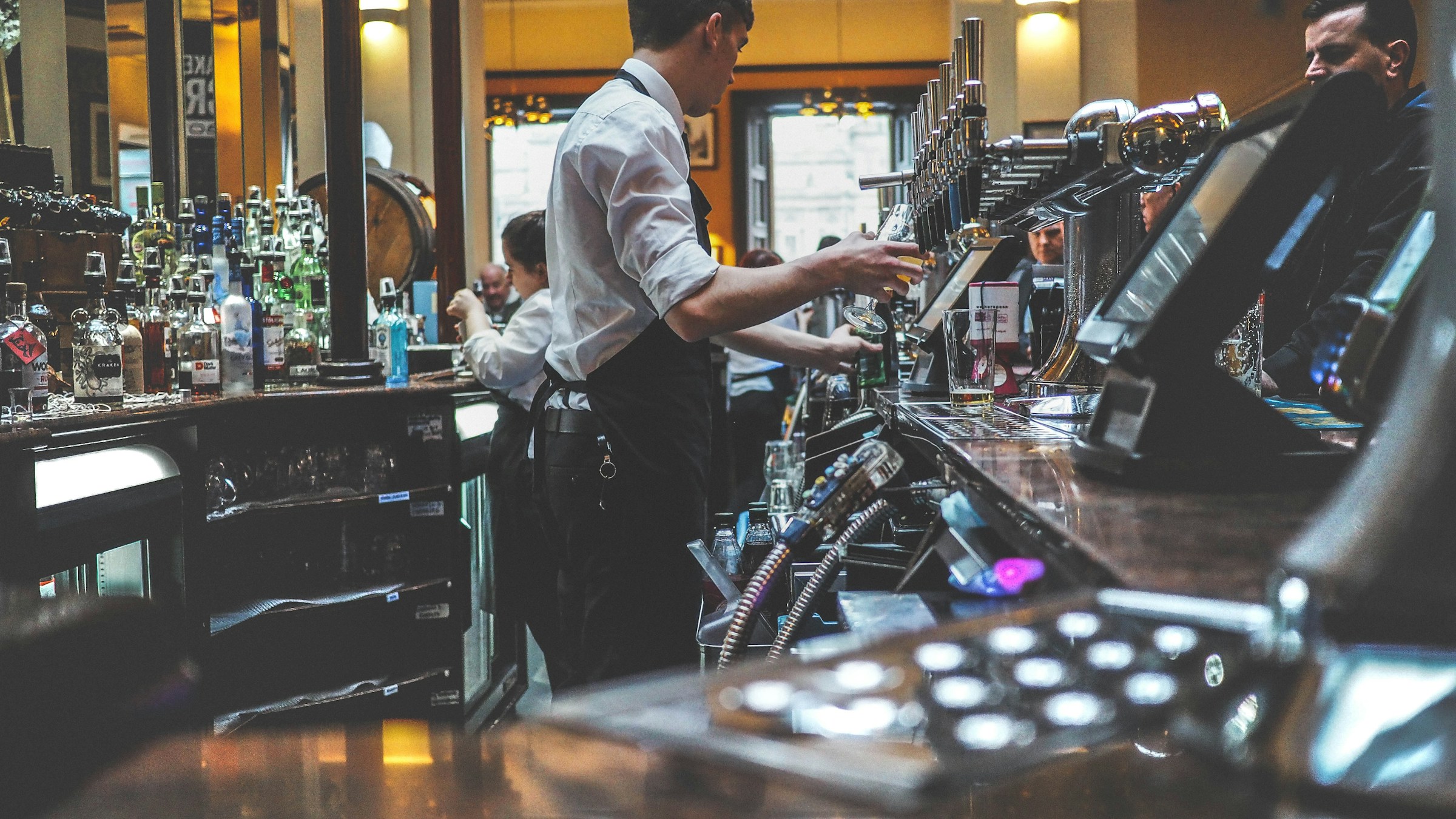
A staffed shift, a self-serve redemption, a takeover and a long thin run across forty venues all get called sampling, get costed the same way, and answer completely different questions. Four formats, four jobs.
The staffed shift
Two brand ambassadors in a venue for two or three hours, pouring and talking.
This moves the most drinks per hour of anything on this list, and the reason isn't complicated: a person actively offering a sample converts attention that a table tent never gets. There's also evidence the human matters beyond throughput. Heilman, Lakishyk and Radas, in the British Food Journal, found that interaction with the person distributing a sample increased the likelihood of a purchase afterward.
The cost is the constraint. Event Marketer's cost benchmarking report, built from 122 responses collected in November 2019, put brand ambassador rates at roughly $26 to $53 an hour depending on market and role, before agency fees, travel or management. Two people for three hours is a real number before anyone pours anything, and it buys you that venue on that night only.
The table tent or menu insert
Passive, cheap, and it works while nobody is watching.
What it gives up is the conversation. A guest who picks up a table tent is already interested; the format can't create interest in someone who wasn't looking. It also puts the brand in the venue for the length of the program rather than for one shift, which is a different kind of value and easy to undercount.
The bartender recommendation
The highest-converting format and the hardest to buy.
A bartender who knows the product and suggests it carries more weight than any collateral, because the guest asked and the bartender answered. It depends entirely on staff who have tried the liquid and remember it, which means the real work is a brief and a taste rather than a media buy. It also decays — the staff who were briefed in March aren't the staff working in September.
The guest-initiated scan
The guest does the work: sees a code, scans, registers, receives.
This produces the only format on the list where you know who drank the product. That's the whole argument for it, and it costs you people at the point of registration — every step between the scan and the drink loses some of them.
How to choose
Match the format to the job rather than the budget.
If you need throughput on a single night, staffing wins and you should price it properly. If you need presence across weeks, collateral is cheaper and slower. If you need the staff on side, the brief is the program. And if you need to know who tried it, you need a format that asks them, and you should expect to pay for that in volume.
Most programs use one format because that's what the vendor sells. The better ones combine two, usually a passive format running the length of the window with one staffed night inside it.
We don't run every format described here, and the right one often isn't ours. Happy to talk the trade-offs through either way.